Explainer
What Are Nerf Bars? Definition and How They Mount on a Truck
On a truck, nerf bars are usually tube steps that bolt on along the cab, below the doors, so you can climb in and out. The name comes from a racing part, and it is not a build spec: sellers also put it on flat boards. They normally hang on brackets from the body, and the mounting points change by truck, as the install sheets show.
Straight answer
Nerf bars are steps mounted along a truck's cab, usually a tube about 3 to 3.5 inches wide on the listings we read. They attach through brackets at factory points in the body panel, such as threaded holes or studs. The word is loose: a title can call a flat 6-inch board a nerf bar, and on quad bikes it means a different part altogether.
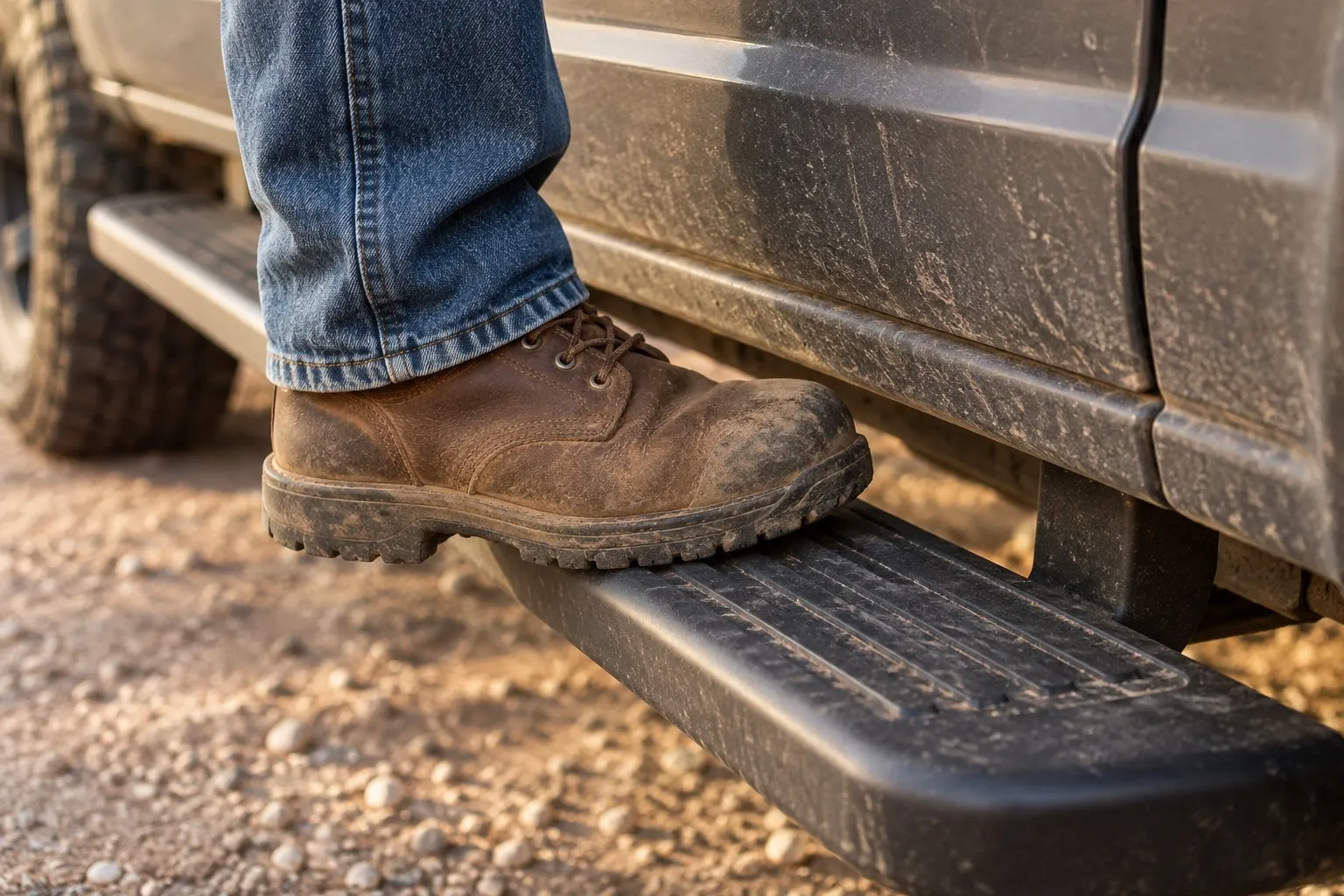
A running board is a step mounted below a truck's doors that makes it easier to climb in and out. A nerf bar is one form of it, usually a tube rather than a flat plank. That covers the short answer. The rest of this page covers where the word comes from, what it does and does not tell you, and how these things actually attach to a truck. For parts by truck, go to nerf bars for trucks.
Where the word comes from
Nerf bars started on the track. Wikipedia describes a nerf bar as a tubular device on the side of a race car, usually a single-seater on an asphalt or dirt oval, there to keep tires from tangling when cars touch. The same article uses the word for a small bump between two cars during a pass.
It lists two other uses. On quad bikes, the bars help stop the wheels of two machines from tangling. On a pickup or SUV, it calls them a convenience: a step for getting in and out that can also shield the body over rocks. Wikipedia does not say where the word itself comes from, and we found no sourced answer.
What the word tells you, and what it does not
The word tells you less than you would think. Truck listings stack these names on top of each other:
- The Tyger title for TG-SS2C35068 says "Running Boards" and "Side Step Rail Nerf Bars" for one part.
- Tyger's own sheet for TG-SS2D35098 has "Step Bars" in its header, while the listing title calls that part Rider Running Boards with "Nerf Bars" at the end.
- The APS title calls a flat, 6-inch black stainless board "Running Boards Nerf Bars".
- Westin's catalog sells "Oval Nerf Bars", "Drop Nerf Bars" and "Nerf Step Bars" in one category with its running boards.
So the name is no guarantee of the shape. On the listings we compare, tube-style nerf bars run from 3 inches (MaxMate) to 3.5 inches (Tyger Rider), and the flat parts sold under the same word are about 6 inches. Read the shape and width in the title. Check your exact year and cab on the listing before you buy.
If you are weighing the styles against each other, see nerf bars vs running boards, nerf bars vs side steps and running boards vs side steps.
How nerf bars mount
Here is the part most explainers skip. A nerf bar does not bolt straight to the truck. It sits on brackets, and the brackets attach at points built into that truck's body, so each part follows one truck's layout. We read four Tyger instruction sheets for crew cab rails, and each one does it differently:
| Part and truck, according to the listing | What the bracket attaches to, per Tyger's sheet | Brackets | Drilling |
|---|---|---|---|
| TG-SS2C35068, 2019-2026 Silverado and Sierra 1500, 2020-2027 2500 and 3500HD, Crew Cab | Threaded holes behind plastic plugs along the bottom edge of the body | 8 | No drilling step |
| TG-SS2D35098, 2019-2027 Ram 1500 (Not fit 19-24 Classic), Crew Cab | Factory studs on the inner sidewall of the body panel | 6 | No drilling step |
| TG-SS2C35168, 2015-2027 Colorado and Canyon, Crew Cab | Clip nuts slid into holes in the body panel, behind rubber plugs | 6 | No drilling step |
| TG-SS2D35318, 2010-2018 Ram 1500, 2500, 3500 and Ram Classic, Crew Cab | Nut plates or threaded inserts, plus support brackets on the pinch weld | 6, plus 6 support brackets | "DRILLING MAY BE REQUIRED" |
Read 2 November 2026. These are four parts, not a rule for all nerf bars. Fit in the first column is as the listing states it.
Three things stand out.
The attachment point changes by truck. That is the reason a bar for one truck will not go on another, even when both are called crew cabs. Each part is built for specific model years and cabs, sometimes bed lengths.
None of these four sheets mentions the frame. They all attach to the body: the bottom edge, the panel sidewall or the pinch weld. Other brands may do it differently, so do not take "bolt-on" to mean frame-mounted. If frame mounting is what you are after, read heavy-duty running boards and the rock slider comparison.
"No-drill" is not automatic. Tyger's older Ram sheet says 2009-12 models may not have factory holes in the pinch weld and will need drilling there. The other three sheets have no drilling step, and Westin says "no drilling required for most applications" about its HDX Drop bars. "Most" is the honest word.
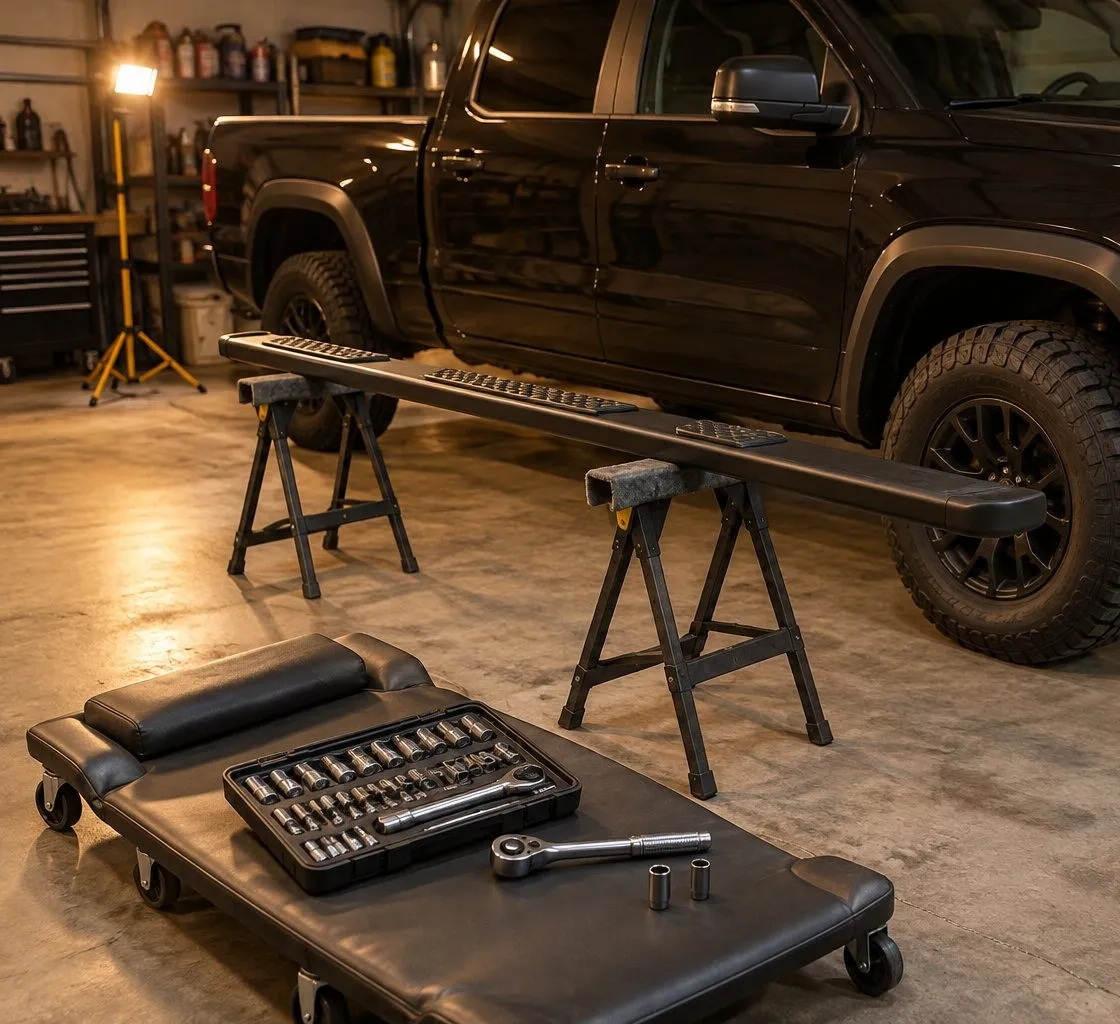
Three of the four sheets say assistance is recommended. Two of them note that a step pad sits closer to one end of the bar, so identify the correct side before you lift it. Our install guide has the general job, and your own sheet has the final word.
What nerf bars will hold
No shared number exists, so do not trust anyone who gives you one for nerf bars in general. The four Tyger sheets above state no weight rating. A missing rating means it was not stated, and it says nothing about what the part can hold. We print a rating only from the maker's own document, and how much weight running boards can hold collects the ones we have read.
Are they right for your truck?
Go tube if you want a slim line along the cab and do not need a big foot area. Go wider if you or your passengers want more room to plant a boot. Go with a drop style if the first step is the problem. The bar itself is the easy choice. Finding the listing that names your year and cab is the real work.
Start at nerf bars for trucks for our picks, or go to all trucks and work down from your make. How we verify fitment explains why every fit line here is a quote and never our own conclusion.
Tailgate questions
What are nerf bars on a truck used for?
Mainly as a step for getting in and out of the cab. Wikipedia describes them as a convenience on pickups and SUVs and adds that they can shield the body when driving over rocks and double as side bull bars. Protection is a claim to check part by part, because the Tyger sheets we read cover install and state no rating.
Why are they called nerf bars?
The name comes along with the racing part, a side-mounted tube on oval-track cars. Wikipedia describes that use but does not explain where the word came from, and we found no sourced origin story. Treat any tidy explanation you read with care unless it cites something.
Do nerf bars bolt to the frame?
Not on the four Tyger crew cab parts whose sheets we read. Those brackets attach to the body: threaded holes along the bottom edge, studs on the inner sidewall of the body panel, clip nuts in the panel, or the pinch weld on older Rams. Other brands may differ, so read the sheet for your part number.
Do nerf bars need drilling?
It depends on the part. Tyger's sheets for its 2019-up GM, new-body Ram and Colorado rails have no drilling step. Its older Ram sheet prints DRILLING MAY BE REQUIRED and says 2009-12 models may lack factory holes in the pinch weld. Read the sheet for your exact part number before you plan the job.
Are nerf bars the same as running boards?
They overlap. A nerf bar is one form of running board, a step mounted below a truck's doors, and listings use the words together. One Tyger title says running boards, side step, rail and nerf bars at once. Generally a nerf bar means a tube and a board means a wider flat step, but go by the shape and width in the title.
Where this comes from
- Wikipedia: Nerf bar
- Tyger Auto instruction sheet TG-SS2C35068 (PDF hosted by CARiD)
- Tyger Auto instruction sheet TG-SS2D35098 (PDF hosted by CARiD)
- Tyger Auto instruction sheet TG-SS2C35168 (PDF hosted by CARiD)
- Tyger Auto instruction sheet TG-SS2D35318 (PDF hosted by CARiD)
- Westin Automotive: nerf bars and running boards catalog
Keep reading
- Buying guideNerf barsNerf bars for trucks by cab and year. What the name really covers, how wide the rails are, what the install sheets say, and our picks where we read a maker sheet.
- ComparisonNerf bars vs running boardsNerf bars vs running boards: usually a 3-inch tube against a 6-inch board, but titles mix the words. What differs, what no maker publishes, and which suits you.
- ComparisonNerf bars vs side stepsNerf bars and side steps overlap on most listings. The word settles nothing; shape and width do. See how titles use both terms and which one fits your truck.
- ExplainerWhat are running boardsA running board is a step mounted below a truck's doors. What running boards are for, what the steps on a truck are called, the types, and how they mount.
- How-toHow to installHow to install running boards from the maker sheets: find the mounting points, hang brackets loose, level, torque, and when a kit really does need a drill.
- CompatibilityAll trucksWhich running boards fit your truck depends on model, year block, cab and sometimes bed. See the splits listings state for each truck and where to start.
Who writes this
runningboardsfortrucks.com Editorial Team
Fitment, buying advice and explainers
We are the editorial team at runningboardsfortrucks.com. We read listing titles, maker pages and instruction sheets, then write down which truck, year and cab each one states and where we read it. We do not run lab tests and we do not own a test fleet, and we say so openly.
- Fit quoted from the listing or maker
- Sources and dates on every page
- No lab tests, stated openly
- Publisher details in the imprint