Explainer
Truck Cab Types by Make: Regular, Extended, Double, Crew, Quad, SuperCab, SuperCrew, CrewMax
Trucks come in three cab types: regular, extended and crew. The trouble is the names. Ford says SuperCab and SuperCrew, Ram says Quad and Mega, Toyota says CrewMax, and Double Cab lands in the extended group on one truck and the crew group on another. This page sorts every name by maker and shows what the size difference looks like in inches.
Straight answer
ARIES groups pickups into three cab types. Regular: two full-size front-hinging doors and usually no space behind the row. Extended: at least two full-size doors, with the back seat reached through smaller rear doors or by moving the front seats. Crew: typically four full-size doors and two full rows. The maker's name for your cab is what a running board listing will use.
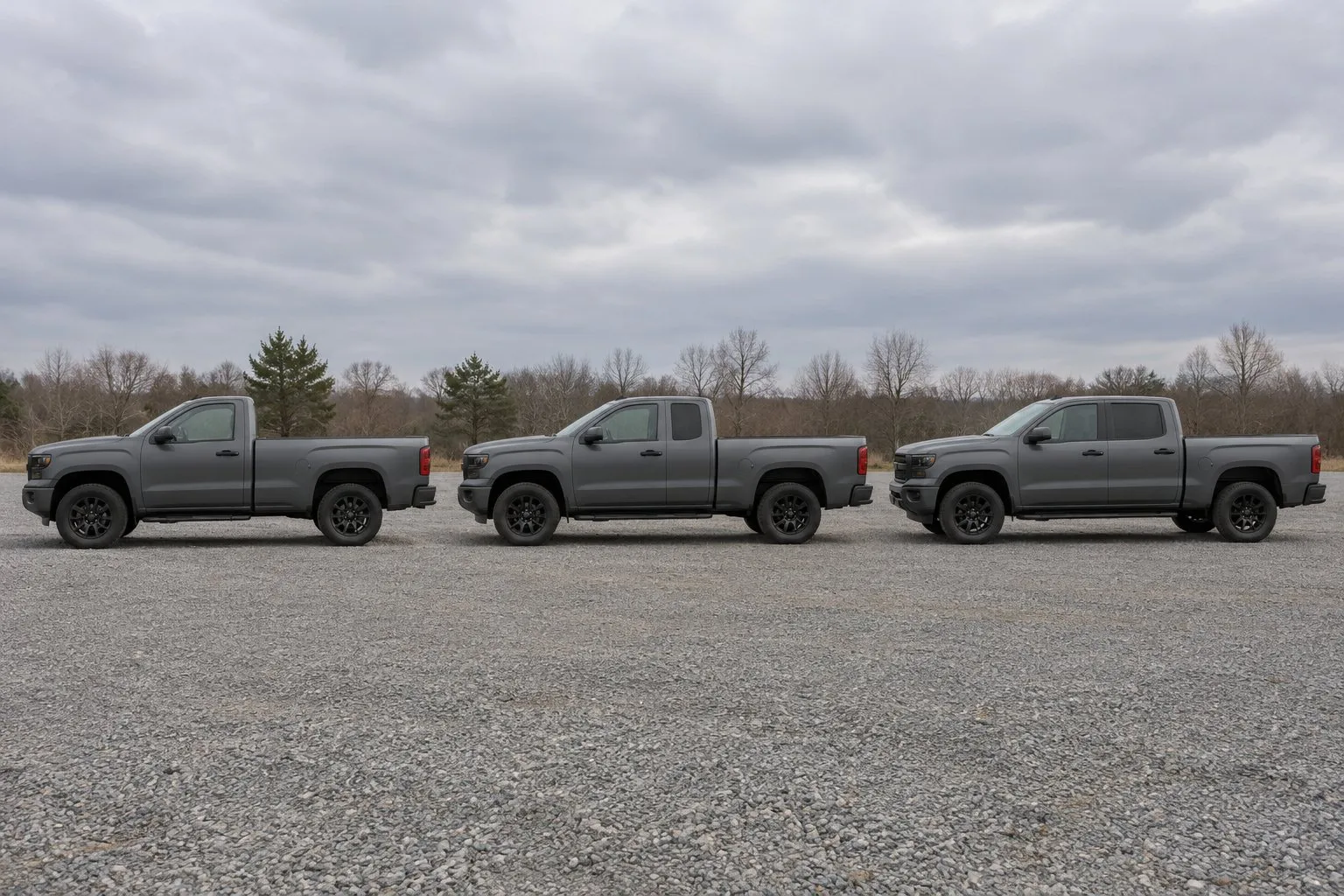
Three cab types, more than a dozen names. If you are here because a running board listing used a word that is not on your paperwork, the table below is the fix.
The three types in plain terms
The ARIES cab guide is the clearest neutral sorting we found. ARIES says plainly that its table is there to aid understanding and does not mean the trucks share a design.
| Type | Doors | Behind the first row | Seats, per ARIES |
|---|---|---|---|
| Regular | Two full-size, front-hinging | Usually no extra space | Two or three |
| Extended | At least two full-size, front-hinging | Extra seating, reached by moving the front seats or through smaller rear doors | Not stated |
| Crew | Typically four full-size, front-hinging | Two full rows; some of the largest add space behind the second row | Up to five or six |
ARIES also notes that an extended cab typically has a smaller set of passenger windows behind the first-row windows. That is a quick visual tell from across a parking lot.
Every name, by maker
This is the ARIES table for trucks you are likely to be shopping boards for. A dash means ARIES lists no cab in that group.
| Truck | Regular | Extended group | Crew group |
|---|---|---|---|
| Chevrolet Silverado, GMC Sierra | Regular | Extended (before 2004), Double (2014 to current) | Crew |
| Chevrolet Colorado, GMC Canyon | Regular | Extended | Crew |
| Ford F-150 | Regular | SuperCab | SuperCrew |
| Ford Super Duty | Regular | SuperCab | Crew |
| Ford Ranger | Regular | SuperCab | SuperCrew |
| Ram 1500 | Regular | Quad | Crew |
| Ram 2500, 3500 | Regular | – | Crew, Mega |
| Nissan Frontier | Regular | King | Crew |
| Nissan Titan | – | King | Crew |
| Toyota Tacoma | Regular | XtraCab (1995-2004), Access (2005 to current) | Double |
| Toyota Tundra | Regular | Access (2000-2006), Double (2007 to current) | Double (2004-2006), CrewMax (2007 to current) |
Three things jump out. Double shows up in both columns, and on the Tundra it changed columns inside one truck line. Ford uses SuperCab on the F-150, Super Duty and Ranger, but switches its crew word between SuperCrew and Crew. And ARIES still shows Access for the current Tacoma, while newer listings say XtraCab, so read the listing against your own truck and not against this table alone.
The table has limits. Chevrolet's own trucks page uses Extended Cab where ARIES says Double, per the extended cab vs crew cab page, and at least one listing title uses both words at once. When a table and your paperwork disagree, your paperwork and your doors win.
Truck cab sizes: what the inches look like
No standard size exists for a cab type. So we show one truck where the maker publishes the numbers. All of this is from Ford's 2026 F-150 technical specifications, in inches.
| 2026 F-150 cab | Front bumper to back of cab | Rear legroom | Wheelbase | Box lengths |
|---|---|---|---|---|
| Regular Cab | 121.2 | None listed | 122.8 or 141.5 | 6.5 ft or 8 ft |
| SuperCab | 143.8 | 33.5 | 145.4 | 6.5 ft |
| SuperCrew | 155.5 to 155.9, by version | 43.6 | 145.4 or 157.2 | 5.5 ft or 6.5 ft |
Read the last rows closely. A SuperCab with a 6.5-foot box and a SuperCrew with a 5.5-foot box share a 145.4-inch wheelbase, yet the cab ends about 12 inches further back on the SuperCrew. Same wheelbase, different door layout. That is why a step is sold by cab and not by truck length.
Bed choices shift by cab too. Ford's F-250 XL page gives the Regular Cab an 8-foot bed, and the SuperCab and Crew Cab a 6.75-foot or 8-foot bed. Ram's FAQ says the 2026 Ram 2500 Crew Cab goes up to an 8-foot bed, 98.3 inches, and that a 6-foot, 4-inch bed is also offered. For Toyota and Chevrolet we have only search excerpts, because their sites blocked our reader, so we leave those out here.
Why this matters for running boards
A running board is a step mounted below a truck's doors that makes it easier to climb in and out. Each part is built for specific model years and cabs, and sometimes bed lengths.
- Length changes with the cab. RealTruck's guide for the AMP PowerStep 76255-01A lists 79 inches for the Crew Cab, trimmed to 69 for the Double Cab and 50 for a single cab.
- The name in the title is your filter. A title reading "Crew Cab" does not state a Double Cab fit. The Tundra is the classic trap, covered on the 2007-2021 Tundra page.
- Bed length comes in past the cab. Cab-length boards follow the cab. Wheel-to-wheel boards run on to the rear wheel, so the bed has to match. Bed and cab fitment explains how to read those titles.
We never work out fit from any of the numbers above. They explain why listings split, not whether a part fits your truck. Fit comes from the listing title or the maker, the way how we verify fitment lays out.
Not sure which cab you have?
Count the doors, then compare them. Four doors of about the same size point to the crew group. Short rear doors, or no rear doors and a seat that moves forward, point to the extended group. Two doors and nothing behind the row is a regular cab. Then find your maker's word for it in the table, and confirm with your window sticker or a dealer. The step-by-step version is on how to tell which cab you have.
The comparisons worth reading
- Extended cab vs crew cab: doors, back seat and why boards don't swap.
- Double cab vs crew cab: the name that means different things by maker.
- SuperCab vs SuperCrew: Ford's two four-door layouts.
- Quad cab vs crew cab: the Ram split.
- What is a crew cab?: the short definition with maker names.
Shopping by cab
Know your cab and your truck? Start at running boards by truck. If your truck is a two-door, regular cab running boards has the short list that most buying guides skip. Check your exact year and cab on the listing before you buy.
Tailgate questions
What are the three types of truck cabs?
Regular, extended and crew. ARIES describes a regular cab as seating two or three behind two full-size doors, an extended cab as adding seating behind the first row, and a crew cab as the largest, typically with four full-size front-hinging doors. ARIES says its grouping is only meant to aid understanding.
What are the sizes of truck cabs?
No shared size exists for a cab type. Ford's 2026 F-150 sheet gives one real comparison: front bumper to back of cab is 121.2 inches on the Regular Cab, 143.8 on the SuperCab and 155.6 on most SuperCrew versions. Other trucks have their own numbers, so use your maker's sheet.
Is a Double Cab an extended cab or a crew cab?
It depends on the truck. ARIES files the Silverado and Sierra Double Cab and the 2007-to-current Tundra Double Cab under extended, and the Tacoma Double Cab under crew. Look at your own rear doors and use the name your maker gives that cab.
What is a Mega Cab?
It is Ram's name for a cab that ARIES files in the crew group, alongside the Crew Cab on the 2500 and 3500. ARIES also notes that some of the largest crew cabs offer extra space behind the second row. Boards for a Ram Crew Cab are not a stated fit for a Mega Cab unless the listing names it.
Does the cab type change which running boards fit?
Yes. Listings are cut by truck, year and cab. RealTruck's guide for one GM PowerStep shows it in numbers: 79 inches for a Crew Cab, trimmed to 69 for a Double Cab and 50 for a single cab. Buy by the cab name in the listing, then check your exact year and cab on the listing before you buy.
Where this comes from
Keep reading
- CompatibilityAll trucksWhich running boards fit your truck depends on model, year block, cab and sometimes bed. See the splits listings state for each truck and where to start.
- ExplainerExtended vs crew cabA crew cab typically has four full-size doors. An extended cab has smaller rear doors or a seat-forward layout. See each maker's names and why boards don't swap.
- ExplainerDouble vs crew cabIs a double cab a crew cab? On a Tacoma it sits in the crew group; on a Silverado and a 2007-up Tundra it does not. See the cab table and what it does to board fit.
- ExplainerCab and bed fitmentCab length running boards run along the cab, wheel-to-wheel boards run to the rear wheel. How cab names and bed length decide fit, and how to read a listing title.
- Buying guideRegular cab boardsRegular cab, single cab, standard cab and 2-door all mean short boards. See what listings and makers state by truck and year, and why crew cab boards do not swap.
- How-toWhich cab do you have?Find your truck's exact cab name in six steps: paperwork, VIN decoder, doors, hinges and the maker's name. Why door count alone can buy you the wrong boards.
Who writes this
runningboardsfortrucks.com Editorial Team
Fitment, buying advice and explainers
We are the editorial team at runningboardsfortrucks.com. We read listing titles, maker pages and instruction sheets, then write down which truck, year and cab each one states and where we read it. We do not run lab tests and we do not own a test fleet, and we say so openly.
- Fit quoted from the listing or maker
- Sources and dates on every page
- No lab tests, stated openly
- Publisher details in the imprint